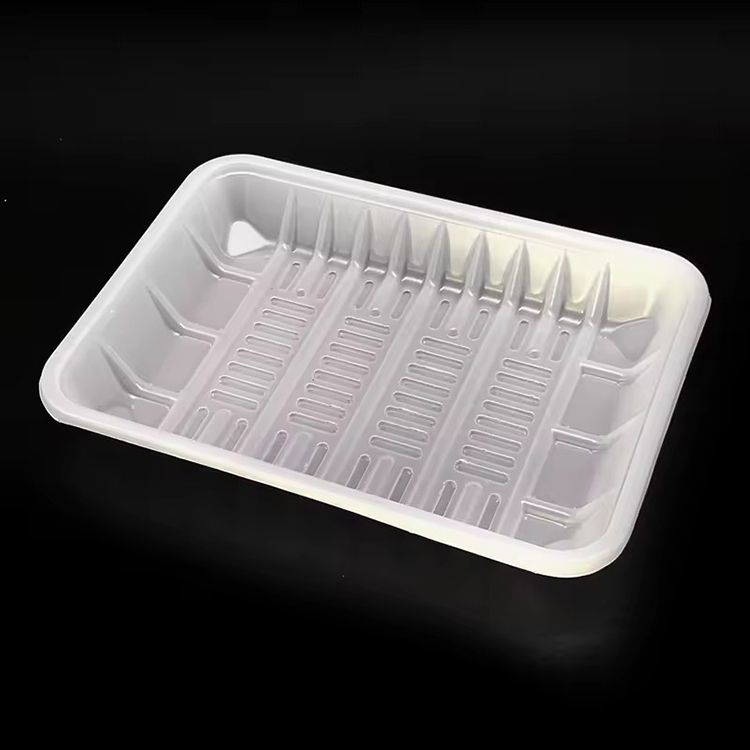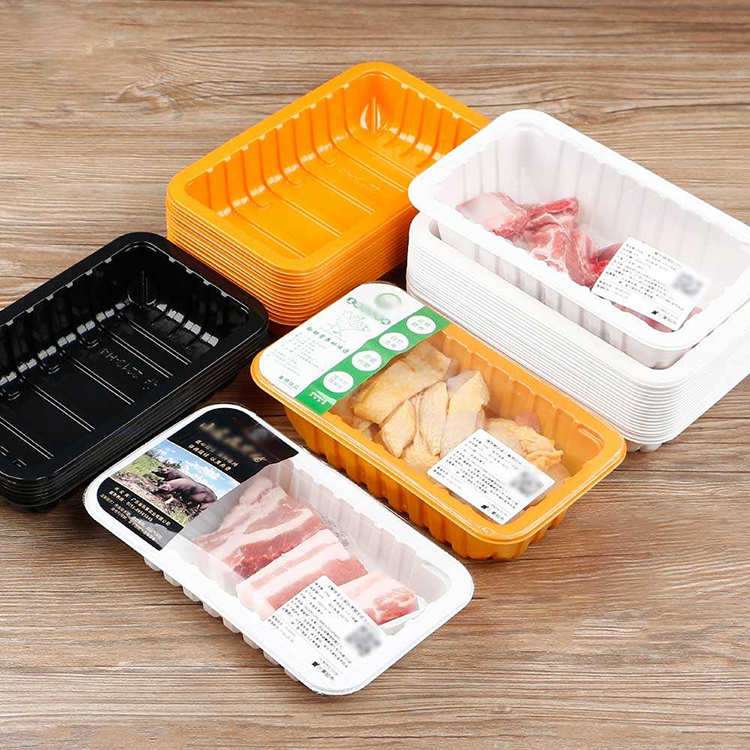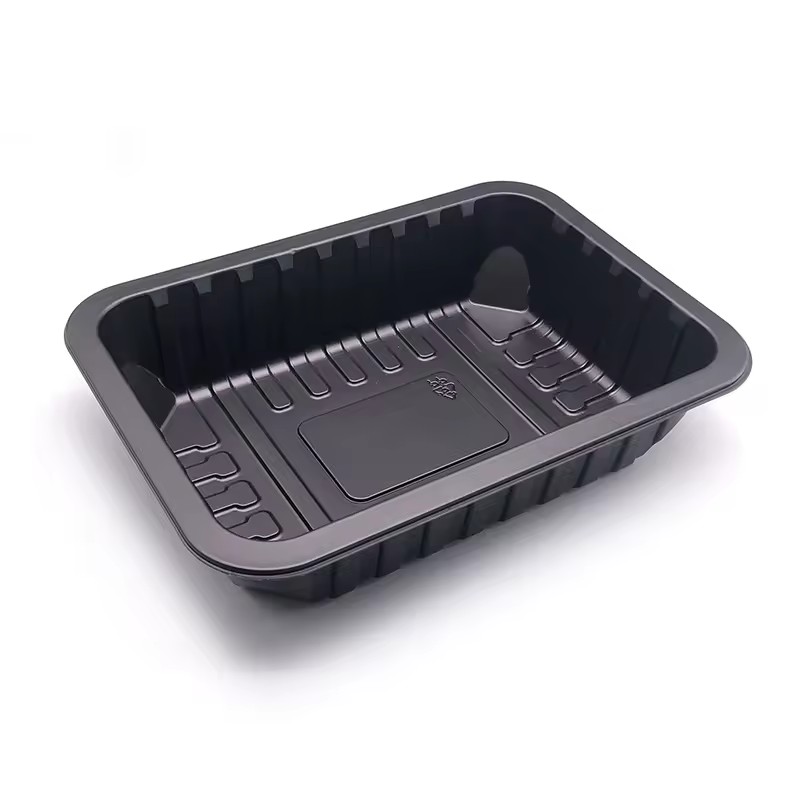
The rolled edge fresh food trays have significant advantages over ordinary flat edge trays in the transportation and storage of fresh food, liquids or high-moisture goods, mainly reflected in the following aspects:
- Leak-Proof Design
Rolled-edge structure: The tray’s curled edges form a barrier to prevent liquids (e.g., blood, juice, or condensation) from spilling, avoiding cross-contamination or environmental contamination.
Enhanced sealing: Compatible with absorbent pads or leak-proof films, further reducing seepage risks—ideal for meats, seafood, or frozen goods with high moisture content. - Hygiene and Safety
Reduced contamination: Minimizes bacterial growth by containing liquids, meeting food safety standards (e.g., FDA, HACCP). Critical for fresh food and medical supplies.
Edge protection: Rounded edges eliminate sharp corners, reducing risks of cuts to handlers or packaging damage. - Structural Strength & Durability
High load capacity: Reinforced edges improve weight-bearing performance, suitable for stacking or heavy loads.
Deformation resistance: The rolled-edge design resists cracking or warping, extending service life compared to flat-edged trays. - Versatility & Compatibility
Packaging integration: Curled edges secure cling film, lids, or labels for easy sealing and identification.
Automation-friendly: Standardized dimensions (e.g., Euro/North American pallet sizes) ensure compatibility with forklifts and conveyor systems. - Cost-Effectiveness & Sustainability
Lower waste: Prevents product loss due to leaks, reducing cleanup costs.
In general,Rolled-edge trays excel in leak prevention, hygiene, and durability, making them ideal for perishable or liquid-heavy industries. While slightly more expensive upfront, they reduce long-term risks and operational costs. Selection depends on cargo type (e.g., leak-prone items) and logistics needs.