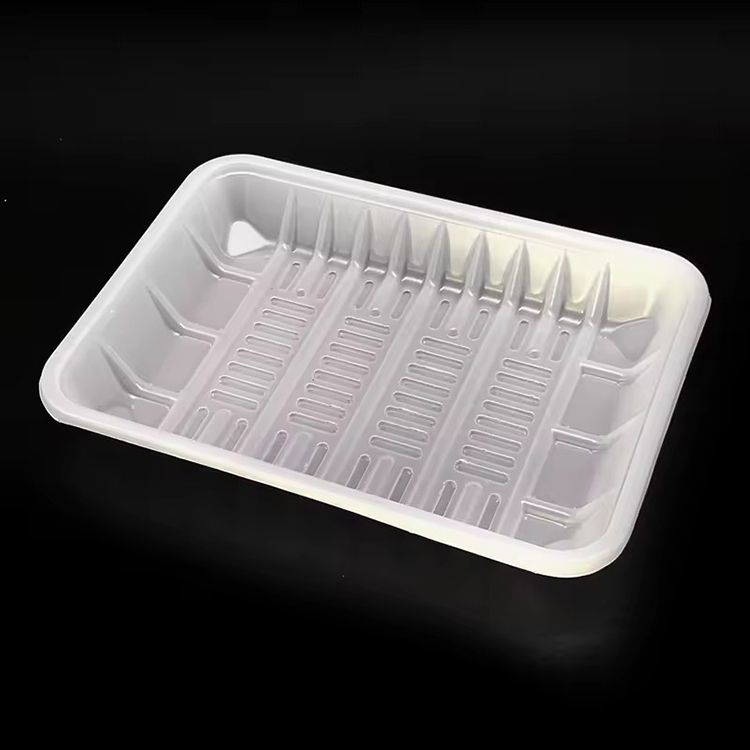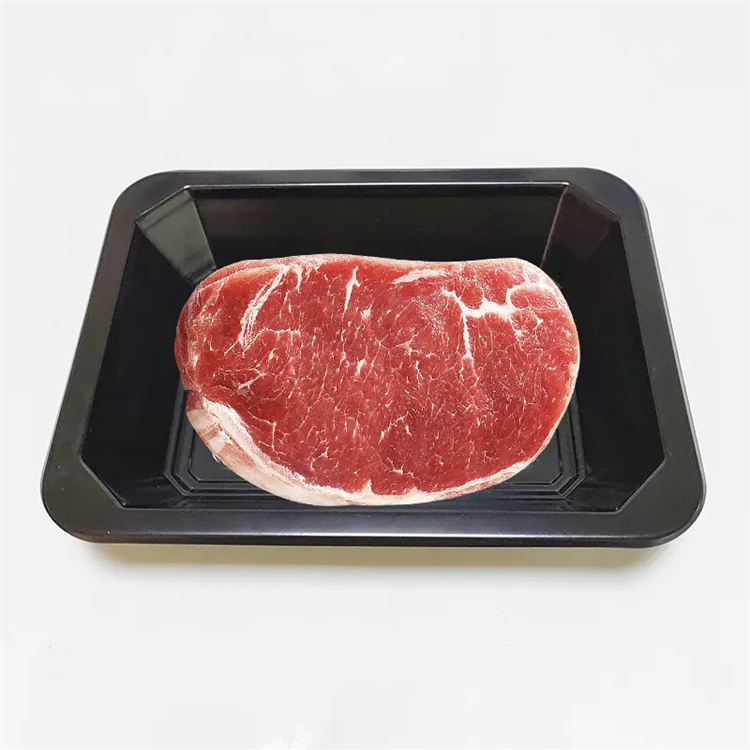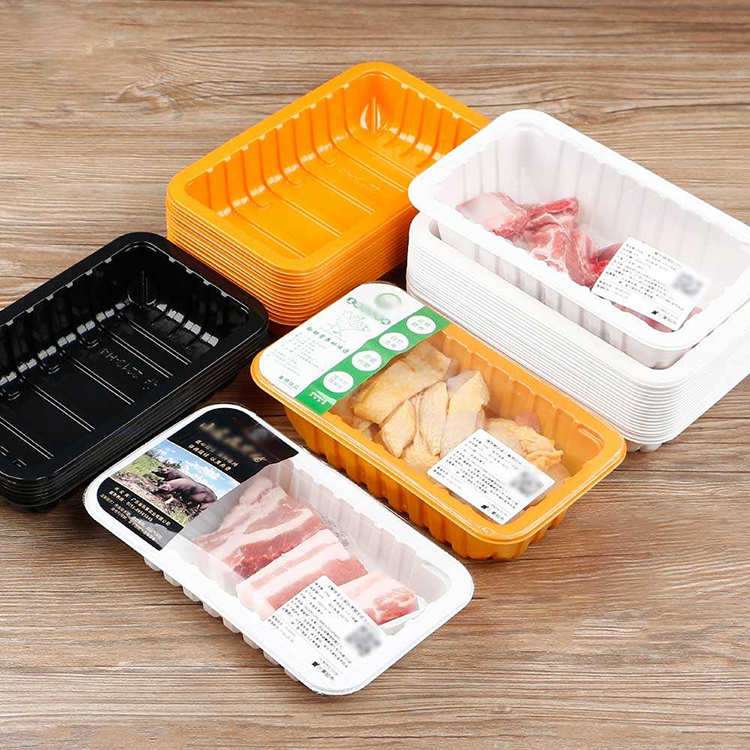
MAP Packaging Trays feature reinforced edges and rims specifically engineered to distribute the weight of stacked trays evenly. When multiple trays are stacked in warehouses, on pallets, or during automated handling, concentrated loads on weak edges can lead to bending or collapse. Reinforced rims act as structural support, channeling the weight across the entire tray perimeter rather than localized points. This design preserves the tray’s shape under compressive stress, ensuring that the tray remains dimensionally stable throughout its lifecycle. Reinforced rims enhance sealing integrity by maintaining the tray’s flatness and alignment with lidding films.
To improve resistance to bending and warping, MAP Packaging Trays incorporate ribbed, corrugated, or embossed patterns on their base surfaces. These structural enhancements create a load-bearing network that strengthens the tray without significantly increasing material thickness or cost. The ribs act as internal braces, distributing vertical and lateral loads efficiently, which minimizes deformation under stacking pressure. This reinforcement ensures that trays can support not only their own weight but also that of the products contained within, maintaining flat surfaces necessary for reliable sealing and packaging efficiency.
The overall geometry of MAP Packaging Trays—including wall angles, corner radii, and depth—is carefully engineered to enhance stacking stability. Slightly tapered sidewalls allow trays to nest when empty, reducing storage volume while still providing resistance to outward pressure when filled. Rounded corners and uniform wall profiles minimize stress concentration points, which are prone to bending or cracking. Optimized tray geometry ensures that vertical loads from stacking are evenly distributed, preserving the tray’s structural integrity during transportation, storage, and automated handling operations.